
Should You Refrigerate Cologne? What 5 Sources Say
This post contains affiliate links. As an Amazon Associate, we earn from qualifying purchases.
You shouldn’t refrigerate most cologne. The Fragrance Foundation says colognes can live in the fridge because they carry more alcohol and less oil than perfume, but Lancome Australia and perfumer Elizabeth Barrial say keep them out unless your home gets genuinely hot, and retailer Alexandria UK says avoid refrigeration unless using a wine cooler at 12-15 C.
That alcohol-to-oil ratio is the whole should you refrigerate cologne argument. An eau de cologne at 2 to 5 percent fragrance oil has far more solvent and far less plant material to protect than a parfum at 20 to 30 percent, so the stakes of getting storage wrong are smaller. Smaller, not zero.
What follows is what five sources actually say, where they split, and the routine that survives all of it.
Key Takeaways
- Skip the fridge unless your home runs hot. Four of the five sources here say no for normal indoor conditions.
- If you do chill a bottle, use a fragrance-only mini-fridge at 1-4 C, not the kitchen fridge where food odors and condensation live.
- Let the bottle warm up sealed before you open it. Cold glass plus room air is how water gets into the juice.
- Citrus colognes gain the most from cold; woody and resinous ones gain the least. Expressed citrus oils run 6-18 months, while vetiver and patchouli run 5-10+ years.
- The bathroom is the worst spot in the house, according to the Good Housekeeping Institute.
Do Fragrance Sources Agree on Refrigerating Cologne?
No. Five sources, four different answers, and not one of them is working from the same set of facts.
Refrigeration slows oxidation in monoterpene-rich oils such as bergamot, lemon and pine needle, and Natural Perfumery Accreditation guidance places fragile oils at 1-4 C. General aromatic storage sits at or below 18-21 C, away from heat swings. Condensation forms when a cold bottle is opened before reaching room temperature, and water ingress damages citrus oils and resinoids.
The should you refrigerate cologne split gets obvious once you line them up. Two sources treat cold as a tool, three treat it as a risk, and the two that say yes are describing different things. The Fragrance Foundation is talking about a sealed bottle in a domestic fridge. The Natural Perfumery Accreditation is talking about raw citrus oil in a working studio.
| Source | Position on the fridge | Stated reason |
|---|---|---|
| Fragrance Foundation | Colognes and toilet waters can be refrigerated; perfume cannot | Higher alcohol, lower essential oil |
| Lancome Australia | No, unless extreme heat | Cold can “shock” the scent; no mechanism given |
| Elizabeth Barrial, Black Phoenix Alchemy Lab | No, unless extreme heat | Light and extreme temperature degrade oils |
| Alexandria UK | No, except a wine cooler at 12-15 C | Condensation and odor contamination |
| Natural Perfumery Accreditation | Yes, for fragile oils | Slower oxidation at 1-4 C |
Barrial’s answer is the most quoted and the most hedged. She says some essential oils can be refrigerated, then adds that unless you know exactly which oils are in the bottle, you won’t know the outcome. That’s a fair warning, and it’s why the rest of this piece sorts bottles by oil type rather than by brand.
Lancome’s answer is the softest of the five. It says cold can “shock” a fragrance and break down scent molecules, but it gives no temperature figure and no mechanism. Read that as a house position rather than a finding.
Why Cold Slows Some Oils and Stalls Others
Oxidation is what turns a bright cologne into something that smells like the dish soap under the sink, and cold slows oxidation down.
A bergamot that’s gone over doesn’t smell like fruit anymore. It smells flat and slightly waxy. Natural Perfumery Accreditation calls citrus oils “not very stable” and names moisture, air and daylight as the three things that push them over.
The reason is molecular size and shape. Monoterpenes, the small volatile molecules that make citrus and pine oils smell like themselves, react with oxygen readily. Sesquiterpenes, the heavier molecules in vetiver, patchouli and sandalwood, are far more sluggish and much more durable.
I can describe what a turned cologne smells like. I can’t tell you the exact chemistry of why linalool oxidizes, and I’ve stopped pretending otherwise. What I know is that a bottle of Acqua di Parma Colonia I left on a shelf near a window went flat and sour by September, and the bottle I kept in a closet didn’t.
Paul McGee’s stability testing protocol in Perfumer & Flavorist runs the same sample at refrigeration, room temperature and 37 C side by side, then assesses odor and color every two weeks for the first month and monthly after that. Cold acts as a brake rather than a preservative. It buys time, and the amount of time it buys depends entirely on which oil you started with.
That’s also why heat makes cologne fade so much faster than cold does. The same reaction runs in both directions, and one direction is much quicker.
What Temperature Should Cologne Be Stored At?
18-21 degrees Celsius is the ceiling for general aromatic storage, per the Natural Perfumery Accreditation’s material care guidance. Below that ceiling, the numbers scatter badly.
| Source | Recommended range | Applies to |
|---|---|---|
| Natural Perfumery Accreditation | 18-21 C or below | General aromatic storage |
| Natural Perfumery Accreditation | 1-4 C | Fragile oils, fragrance-only mini-fridge |
| Alexandria UK | 15-22 C | Cologne in a drawer or wardrobe |
| Alexandria UK | 12-15 C | Wine cooler, if refrigerating at all |
| iColor Cosmetics | 15-25 C | Range fragrance is formulated for |
| Elizabeth Barrial | 12-22 C | General fragrance storage |
That’s a wide spread between the coldest and warmest advice, which tells you something useful. Nobody has a single settled number, and the people giving you one are usually quoting a formulation range rather than a storage finding.
Two of these sources also disagree on what actually goes wrong. Alexandria UK says the temperature swing itself puts moisture inside the bottle when you move it from a cold fridge to a warm room. The Natural Perfumery Accreditation only warns about opening a bottle before it warms. Neither cites a measurement, so treat the swing as a real risk with an unproven mechanism.
If you want a single working target, the ideal temperature for storing cologne sits in the high teens per Natural Perfumery Accreditation’s 18-21 C ceiling, though Alexandria UK gives 15-22 C, iColor Cosmetics 15-25 C and Elizabeth Barrial 12-22 C.
Which Bottles Belong in the Fridge and Which Don’t
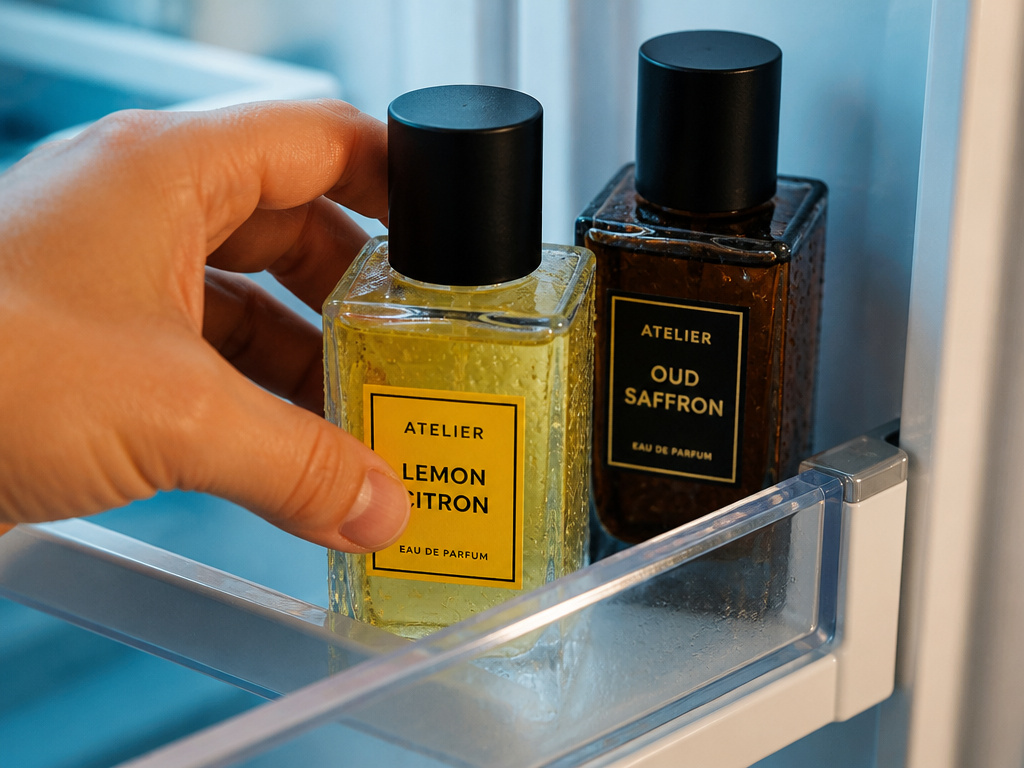
Three groups, and only one of them gets a real benefit from cold.
- Citrus and needle oils, expressed. Bergamot, lemon, orange, grapefruit. Shelf life of 6-18 months, oxidation-prone, and the best candidates for a fridge by a wide margin.
- Absolutes and concretes. 3-5+ years if sealed, cool and dark. They can wax out or throw sediment in the cold, so they need gentle warming and mixing before use. A fridge makes that worse, not better.
- Woods, roots and sesquiterpene-rich oils. Vetiver, patchouli, sandalwood. 5-10+ years, and many improve in tone with age if protected. These gain nothing from cold.
Tinctures in ethanol run multi-year because the ethanol itself is protective.
Concentration matters as much as oil type, because it tells you how much runway you’re protecting in the first place.
| Concentration | Fragrance oil | Opened shelf life |
|---|---|---|
| Parfum / Extrait | 20-30% | 5+ years |
| Eau de Parfum | 15-20% | 3 to 5 years |
| Eau de Toilette | 5-15% | 2 to 4 years |
| Eau de Cologne | 2-5% | 1 to 3 years |
| Body mist | 1-3% | 1 to 2 years |
If you’re going to chill one bottle, make it a citrus cologne rather than a woody extrait. The citrus has 6-18 months of runway and the sandalwood has a decade, so the fridge is doing real work on one and nothing on the other. For a fuller picture of cologne shelf life by type, the concentration table above is the place to start.
What About Freezing?
Freezing is safe for many essential oils and absolutes, according to the same accreditation guidance, but it can precipitate waxes and crystals out of solution. Thaw fully before opening, every time.
For a finished cologne, freezing solves a problem you probably don’t have. If you want the long version, can you freeze perfume is covered in more detail elsewhere.
How to Refrigerate Cologne Without Ruining It
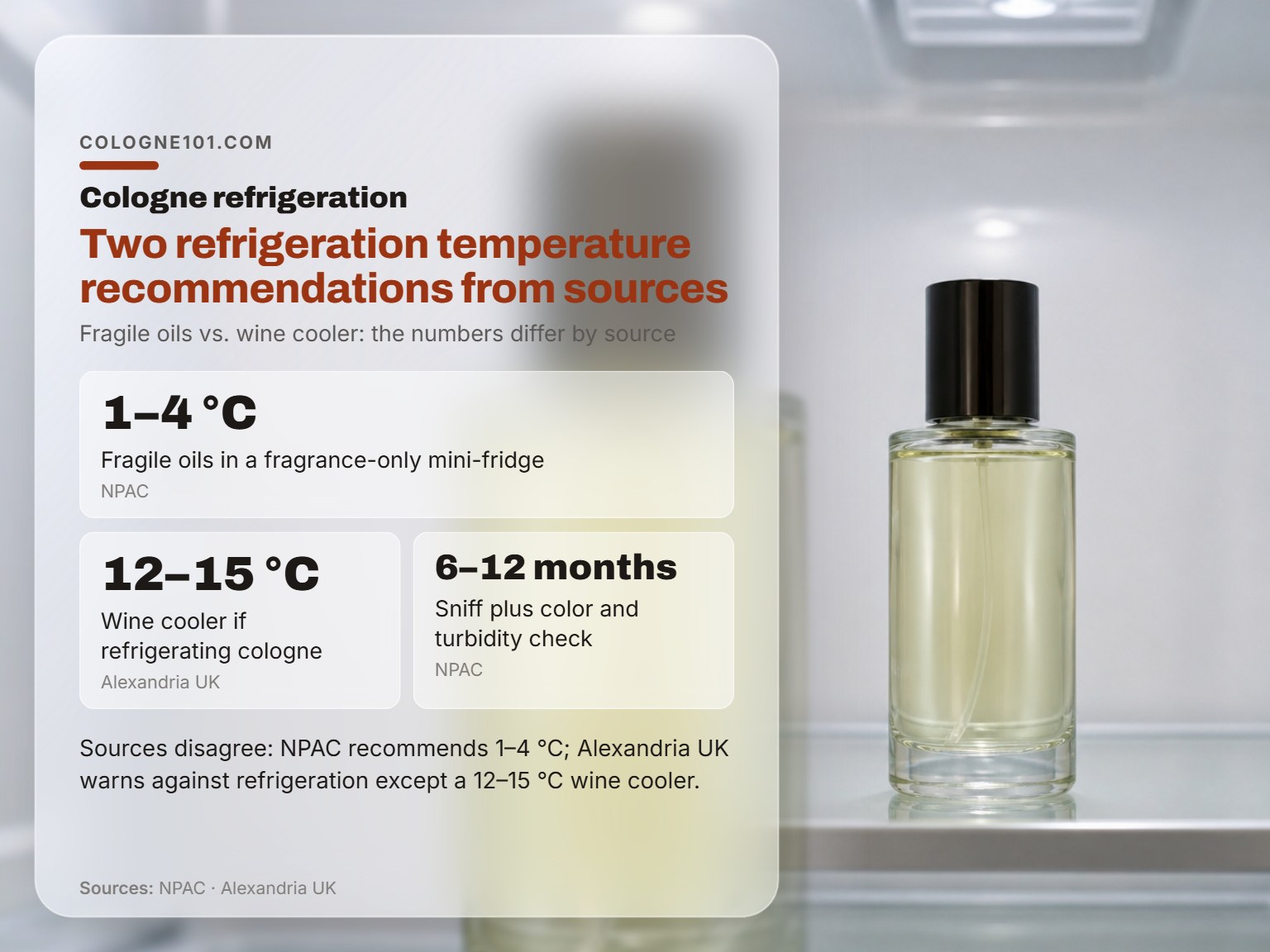
Six steps, and only one of them is about temperature.
- Dedicate a fridge to fragrance only. A shared kitchen fridge exposes caps and loose atomizers to food odors, and Alexandria UK names odor contamination as a specific risk. Porous caps pick up whatever is on the shelf next to them.
- Set it to 1-4 C for fragile oils, or 12-15 C if you’re using a wine cooler. Those are the two numbers the sources actually agree on, and they come from different bodies with different priorities.
- Keep the bottle boxed and upright. Eau de parfum in particular must be stored strictly upright, because the seal is the weak point and lying a bottle down puts juice against it.
- Let it warm sealed to room temperature before opening. Skip this and room air rushes into cold glass, moisture condenses on the inside shoulder, and that water lands in the juice.
- Check every 6-12 months with a sniff plus a color and turbidity look. Rotate first-in-first-out so you’re not discovering an old bottle years later.
- Keep headspace minimal. Decant into the smallest bottle that fits the volume, and top up the work bottle from a gas-blanketed master if you keep one.
Easy to miss: Opening a cold bottle before it warms. The glass is cold, the air that rushes in is warm and damp, and the moisture lands on the inside of the shoulder. Do that repeatedly and you’ve added water to an oil that’s already the least stable class in the collection.
The Condensation Problem
A bottle that went into the fridge clear can come out with a faint haze or a ring of fine droplets on the inside of the neck. That’s the tell, and it shows up before the smell changes.
The fix is patience, not equipment. Set the bottle on the counter, still sealed, and leave it alone until the glass stops feeling cold to the back of your hand. Then open it.
Keeping the cap clean and dry matters here too. The accreditation guidance flags water ingress as a specific hazard for resinoids and citrus oils, and a cap that’s been sitting in condensation is a wet surface against the seal.
If you’re losing volume rather than quality, that’s a different problem, and the fixes for cologne evaporating in a loose atomizer are mostly about the seal rather than the temperature.
When the Fridge Is the Wrong Answer
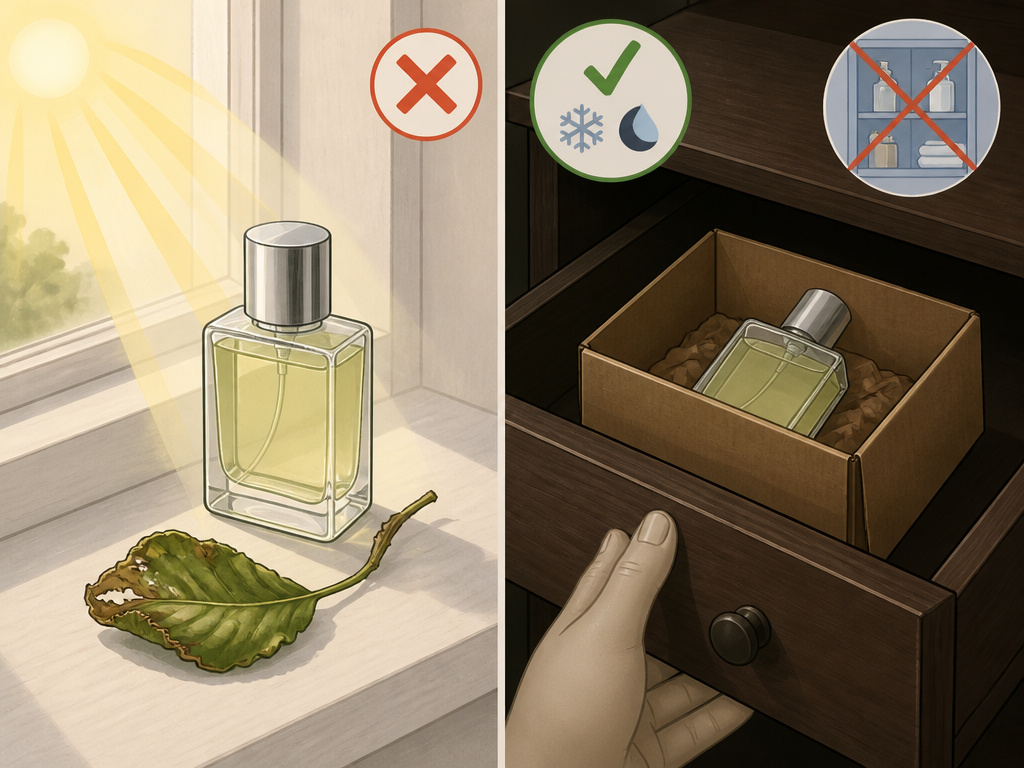
A bathroom shelf is worse than a fridge, and a windowsill is worse than both.
The Good Housekeeping Institute, cited by Alexandria UK, calls bathroom storage the single most harmful mistake UK owners make. Heat, humidity and daily temperature swings all at once, in the room where you shower. That’s a worse environment than a cold fridge by a wide margin.
Light does its own damage on a different timeline. The accreditation guidance notes that bergamot “quickly” spoils in sun, and that dark storage is the default for a reason. A bottle on a sunny sill can go from bright to thin.
Common mistake: Storing cologne in the bathroom cabinet because it’s out of sight. Out of sight and out of light are two different things, and the humidity in that room does more damage than a fridge would.
The Bathroom Is Worse Than the Fridge
Here’s the concession. If your flat genuinely bakes, the fridge starts to make sense for citrus bottles. Alexandria UK’s own defensible case is a home that sustains heat for weeks without air conditioning.
For everyone else, the answer is a drawer. A lidded storage box in a dark wardrobe does the job. If you do decide to chill, a fragrance-only mini-fridge is the shape of the thing the accreditation guidance describes.
And keep the original box. Cardboard blocks light better than glass on an open shelf, which is the cheapest upgrade in this entire article.
Two things not to do. Don’t refrigerate a parfum or extrait, because the Fragrance Foundation draws the line at perfume and gives concentration as the reason. And don’t store decants in a clear bottle on a shelf, because a clear bottle in daylight is a windowsill with extra steps.
If a bottle needs the fridge to survive your flat, the flat is the problem. Fix the room before you chill the cologne.
If you want the full routine rather than the fridge question alone, how to store cologne properly covers boxes, decants and rotation. And if you’re still deciding where the bottles should live, where to keep perfume walks through the rooms in order of how badly they treat the juice.
Frequently Asked Questions
Can I put my cologne in the fridge overnight?
You can, and one night won’t hurt it. The problem is the routine, not the single event. Repeated cold-to-warm swings plus opening the bottle before it warms is what puts moisture in the juice, so an occasional overnight chill is fine and a nightly habit is not.
Does refrigerating cologne make it last longer on skin?
No. Cold storage affects how long the bottle stays good, not how long the scent stays on your skin. Wear time depends on concentration, oil type and your own skin, and a fridge does nothing for any of those.
What happens if I open a cold bottle of cologne?
Moisture condenses on the inside of the glass. The Natural Perfumery Accreditation’s guidance is specific about this: let bottles warm sealed to room temperature before opening. Citrus oils and resinoids are the two classes most sensitive to water getting in.
Is a wine cooler better than a fridge for cologne?
Alexandria UK says yes, at 12-15 C, and treats that as the only defensible refrigeration substitute. The Natural Perfumery Accreditation recommends 1-4 C for fragile oils instead. Both are colder than the 18-21 C general storage ceiling, and neither has published a head-to-head test.
Should I refrigerate perfume or just cologne?
The Fragrance Foundation makes the distinction: colognes and toilet waters can be refrigerated, perfume cannot. The stated reason is that colognes carry more alcohol and less essential oil, so there’s less plant material at risk. Lancome and Barrial both reject the fridge for either.
How do I know if my cologne has gone off?
Smell it against your memory of it. A turned citrus smells flat, waxy or faintly like cleaning product rather than fruit. The accreditation guidance recommends a sniff plus a color and turbidity check every 6-12 months.
The Bottom Line
One threshold decides this for you. If your indoor temperature runs hot, chill the citrus bottles and leave everything else in a drawer. If it doesn’t, the fridge is solving a problem your flat doesn’t have.
The concession is real, though. This all changes if you own three bottles and one of them is a bergamot cologne you wear hard every summer. That bottle has 6-18 months of life in it under the best conditions, and cold genuinely extends that. A vetiver from the same shelf has a decade and needs nothing from you.
So the honest answer to should you refrigerate cologne is narrower than the question suggests. Refrigerate the fragile thing, in a fridge that holds nothing else, and let it warm up sealed before you spray. Everything else in the collection wants a dark drawer and a box.
