
How to Display a Perfume Collection Without Ruining It
This post contains affiliate links. As an Amazon Associate, we earn from qualifying purchases.
How to display a perfume collection safely starts with the room: a steady, moderate spot on an inside wall, away from windows, radiators, and the bathroom. Then match the format to your bottle count, and keep the bottles you aren’t wearing boxed and dark.
That word steady carries more weight than any exact number. Light, heat, and daily temperature swings are what change the juice inside the bottle. Dust only changes how the shelf looks.
What follows is the order worth working in: pick the spot, size the format to your bottle count, then decide what earns a place on the shelf and what goes back in its box.
Key Takeaways
- Pick the room before the furniture. Light, heat, and temperature swings degrade perfume; dust is a looks problem.
- Steady beats exact. Published bands run from 15 to 20°C (WhatScent) to 15 to 22°C (Osmetheca), and the sources don’t fully agree on the ceiling.
- Match the format to the count. Trays, tiered stands, turntables, and cloches suit up to 15 bottles. Risers, glass-door cabinets, and drawers suit 15 to 60.
- Compacts are the exception. The IPBA says don’t fully enclose them, because metal and enamel need to breathe.
- Box what you aren’t wearing. A seasonal front row keeps bottles out of light and keeps the shelf honest.
Where Should a Perfume Display Actually Go?
Start with the room, not the shelf. WhatScent is blunt about the order: choose the place first and the furniture second, because light, heat, and temperature swings change the perfume while dust only changes the shelf.
Temperature stability matters more than the exact reading. A room that holds a steady, moderate band protects a bottle better than a warmer room that swings every day. Placement against an interior wall, away from windows, radiators, and bathroom humidity removes the three biggest sources of that daily cycling, and the check costs nothing before any furniture gets bought.
Here’s the order I’d work through before spending anything.
- Pick an inside wall. An exterior wall runs colder in winter and warmer in summer, and the bottle sits right against it.
- Clear the window. Direct sun is the fastest route to a turned bottle, and reflected light still counts.
- Move away from the radiator and the HVAC vent. The IPBA specifically warns that a vent close to a case causes temperature fluctuations.
- Leave the bathroom alone. Every shower pushes heat and humidity up and down, and WhatScent calls the bathroom the worst room in the house for perfume.
- Skip the top of the central heating. The Perfume Society lists it next to radiators and windowsills.
The two published temperature bands don’t match. Osmetheca gives a dark cabinet at 15 to 22°C (59 to 72°F). WhatScent suggests somewhere around 15 to 20°C, then argues that stability matters more than the number. Both want a moderate room. They split on where the ceiling sits.
None of the sources I read cite lab testing, so treat those bands as guidance rather than measurement.
Sorting out where to keep perfume before you shop saves you from buying a cabinet for the wrong wall. The scent storage and organisation guide from The Perfume Society adds the mechanism: sunlight and heat make perfume evaporate faster and even turn, going darker in the bottle with some top and middle notes burned off.
Fifteen Bottles Is Where the Tray Stops Working
Fifteen is the ceiling for the simple formats. WhatScent puts the vanity tray, tiered stand, turntable, and glass cloche in the up-to-15 bracket, and each earns its place for a different reason: one lift to dust, a visible back row, every bottle in reach, no dust on a favourite.
Above fifteen, the furniture changes shape.
| Collection size | Format that fits | Why it works |
|---|---|---|
| Up to 15 bottles | Vanity tray, tiered stand, turntable | One lift to dust; back row visible |
| 15 to 60 bottles | Acrylic risers, glass-door cabinet | No bottle hides; dust stays out |
| 60+ bottles | Cabinet with door-switch LED | Lit only when the door opens |
| Any size | Seasonal front row | Nothing sits in light all year |
Osmetheca sets a lower threshold, and it’s about management rather than furniture. More than ten fragrances starts to need active management, because below that a wearer can hold the available choices in working memory. For twelve to twenty bottles, Osmetheca says organizing by occasion and season is the most practical system.
I noticed the same thing from the other direction. Solid perfumes made me apply less without trying: one fingertip swipe across the tin, dabbed on each wrist, and that’s it. With a spray I used to do four or five pumps and then wonder why my coworker leaned away.
Fewer pumps means a bottle lasts longer, which quietly changes how many bottles you actually need.
A Glass-Door Cabinet Is the Upgrade for Bottles, Not for Compacts
WhatScent calls a curio or vitrine-style glass-door cabinet the single best upgrade for a growing collection. Bottles stay visible, dust stays out, and a closed door softens temperature swings. A solid-backed cabinet against an inside wall beats an all-glass one in the middle of a bright room.
The IPBA collection display advice agrees on glass for bottles, then draws a hard line at compacts.
Where this goes sideways: Sealing compacts in a fully enclosed case. The IPBA warns that metal and enamel need to breathe, and a sealed case leaves them dry and tarnished.
Open Tray vs Glass-Door Cabinet
An open tray is the simplest place to start and the easiest thing to dust, which is exactly why it stops working past fifteen bottles. A glass-door cabinet does the visible-and-dust-free job for glass bottles. A glass-door cabinet covers the same brief along a longer wall. Acrylic drawers sit at the other end: closed, stackable, and better suited to the bottles you aren’t wearing this season.
| Setup | Best for | Trade-off |
|---|---|---|
| Open tray | Up to 15 bottles | Dust lands on every shoulder |
| Glass-door cabinet | 15 to 60 bottles | Compacts need a vented shelf |
| Closed drawer with dividers | Off-season bottles | Out of sight, so out of rotation |
| Acrylic risers | Tight shelves | Plastic shows scratches |
| Converted clock case | Miniatures and lay-down bottles | One-off finds, hard to match |
Why Compacts Are the Exception
Metal and enamel behave differently from glass. The IPBA’s guidance is to keep compacts out of a completely enclosed case so the metal and enamel don’t go dry or tarnished. That directly contradicts the “seal it and forget it” instinct, and it contradicts the glass-door recommendation for anything with a metal hinge or an enamel lid.
So WhatScent calls the glass-door cabinet right for bottles, while the IPBA says compacts should not be fully enclosed. Run a vented shelf, or leave the door ajar on that section.
The IPBA warns about heat extremes from extended incandescent display lighting; use LED, or limit use of display lighting. The IPBA warns about heat extremes from extended use of incandescent display lighting, and a case built around those bulbs is a hazard you’d manage forever. Use LED, or keep the light off.
What Light Actually Does to the Juice
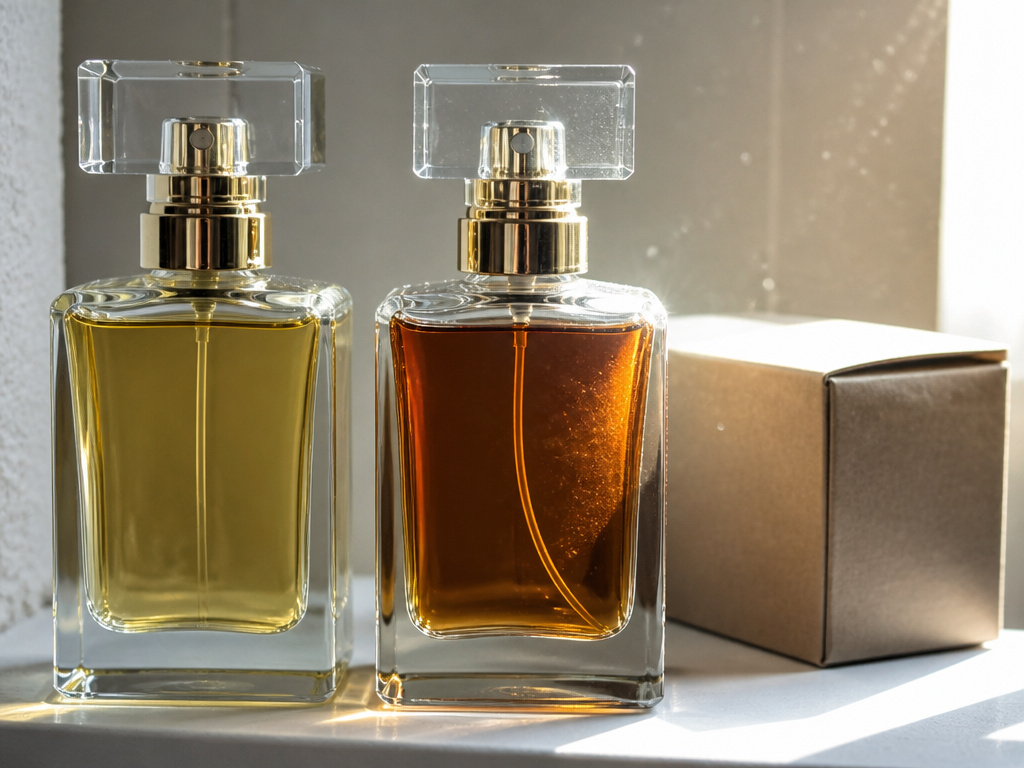
A bottle sits on a sunny shelf for one summer. By autumn the liquid has gone two shades darker and the first spray bites harder than you remember.
I know that one. I used to display bottles on a bright shelf because they looked great. After a few months a couple had visibly shifted toward a darker tone, and the first spray had a harsher edge. Now most of them live in their boxes inside a closet drawer, away from the window and the bathroom.
A turned bottle behaves like a sauce that reduced too far. The bright top notes boil off first, and what’s left reads flat and a little bitter. The Perfume Society describes the same process: the perfume goes much darker in the bottle, with some top and middle notes burned off.
Common mistake: Leaving a clear-glass citrus cologne in the sun because the bottle is too pretty to box. A clear-glass citrus cologne shows every shade change through the glass, so you’ll see the damage before you smell it.
Light control is the main lever if you want to keep perfume fresh over years rather than months. WhatScent’s answer for a big collection is a cabinet with a door-switch LED, which stays lit only while the door is open.
Boxes and Empties Do More Work Than the Bottles
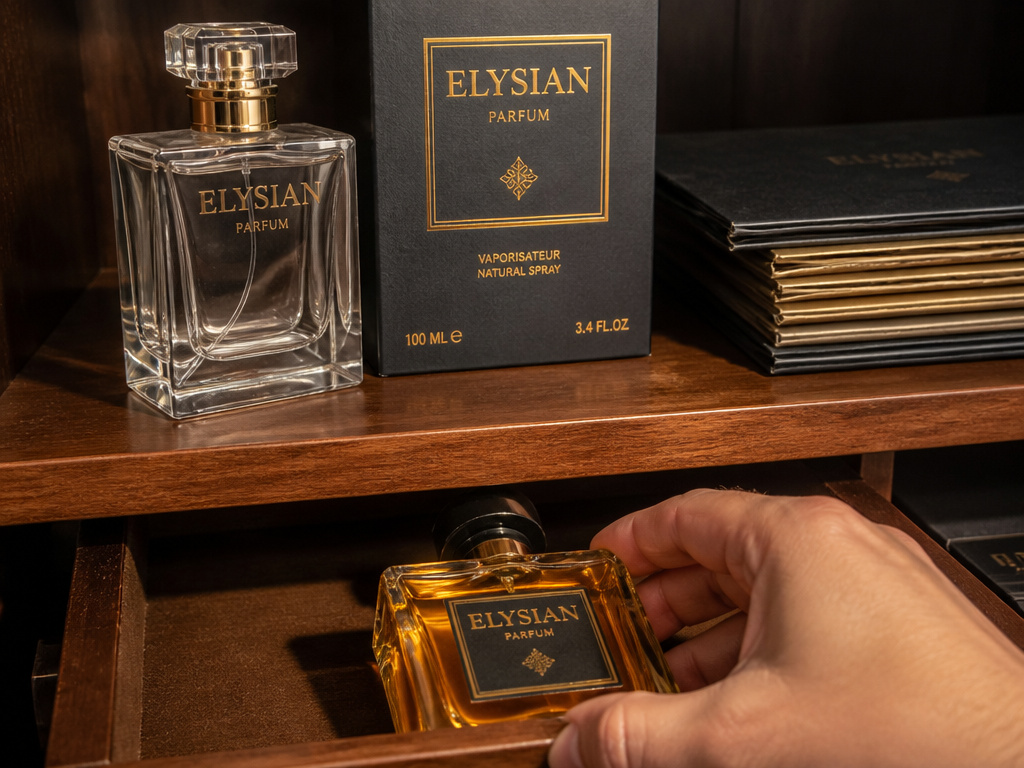
WhatScent makes a case that sounds backwards until you try it. Many collectors show beautiful boxes, emptied flacons, or a single museum bottle on the shelf and keep the full bottles in a drawer. The shelf looks the same and the perfume lasts longer.
The box is also the safest place for a bottle you aren’t wearing this season, and a bottle with its original box is worth more if you ever sell or swap it. Flattened boxes store easily. Keep them dry and out of the light.
Osmetheca draws the line at time rather than season: keep original boxes for any bottle owned longer than two years. Whether a bottle should stay in its original box depends on how long you plan to keep it.
Give every bottle on the shelf a job. If it can’t earn one, box it and let the shelf breathe.
How Do You Stop a Display From Becoming Storage?

Osmetheca names the failure mode precisely. Bottles in the back of the cupboard, on the high shelf, or in unlabelled boxes are effectively absent from the collection, because they aren’t seen and aren’t worn. Organization is the act of pulling every bottle into the daily decision window.
The way you organize a perfume collection decides which bottles actually get worn. L’Oréal Paris suggests grouping by primary colour, with reds and pinks together, clears and whites together, greens and blues together, and patterned bottles sorted by the dominant colour in the pattern. Size is the other L’Oréal option, running smallest to largest along a shelf.
Osmetheca offers three systems instead: olfactory family, occasion and season, or house.
Color, Size, Season, or House?
Colour and size are shelf systems. They make a display look deliberate, and L’Oréal is honest that colour has a cost, since you have to remember what colour each bottle is before you can find it.
Occasion and season is a wearing system, and Osmetheca calls it the most practical choice for twelve to twenty bottles. Olfactory family uses the eight groupings from the Société Française des Parfumeurs nomenclature and the Michael Edwards Fragrance Wheel: hesperidic, floral, fougère, chypre, ambery, woody, leather, gourmand. House is the collector’s system, and it only pays off when your collection is built around three or four houses you follow deeply.
Osmetheca calls occasion and season the most practical system for twelve to twenty bottles, L’Oréal Paris suggests colour or size, and The Perfume Society says the most important thing is that the arrangement makes it easy to find what you want.
Once the system exists, write it down. My notebook template is dull on purpose: name, date tried, a few lines for how it wears over time, then a would-I-replace-it line.
After a while the replace-it line turned out to be the useful part, because it showed me which bottles were filling the same slot. Early on I wrote “smells nice, woody” for everything. A year later I couldn’t tell a cedar-heavy scent from a vetiver one. Self-own.
If you want to catalog your collection, six fields cover it: house, fragrance, concentration, purchase date, batch code, and remaining volume estimated to the nearest 10 ml. A seasonal front row is the simplest way to rotate your collection without moving furniture.
How to Display a Perfume Collection in a Small Space

A shallow drawer with dividers holds more than you’d expect, and it keeps everything dark. That’s the whole trick.
For a small space, a drawer like that holds a good number of boxed bottles, and only the current rotation sits out on a tray. It looks good, and the display stays honest to what I actually wear.
Storing a collection in a small space comes down to vertical room and one shallow drawer. L’Oréal Paris reaches for a small spice rack with tiered shelves when counter or vanity space is tight, since shelves use height instead of surface. A cake stand works as an elevated tray, and an old mirror or picture frame makes a makeshift one.
The Perfume Society goes scavenging: shelving units or corner shelving from charity shops and hardware store sale sections, painted the same colour so they don’t have to match. Vintage travelling cases stack in a corner with the top case open, holding the month’s fragrances.
The IPBA has the small-item formats. An old printer’s type tray holds minis. A vitrine display table suits ornate lay-down bottles. A vintage glass-front clock case from an antique store converts into a display case, and wall cases built for model train cars hold rows of small bottles.
I keep one tray out and everything else boxed in a drawer. The tray changes with the season, and the drawer holds the backups and the off-season bottles. It took me a while to admit the shelf was for looking and the drawer was for keeping.
The 30 Percent Line, and What to Do With Samples

Osmetheca flags a threshold most display advice ignores. A bottle below 30 percent remaining volume loses its opening faster as headspace grows, because there’s more air to react with the juice.
What to Do With a Bottle Under 30 Percent
Decant it into a smaller atomiser. The juice stays the same, the headspace shrinks, and the opening notes hold longer.
Keep the original bottle for the batch code, since that’s the record that matters for authenticity, resale, and insurance. Osmetheca also notes that refrigerated storage extends perfume life further but isn’t necessary, and no other source I read endorses it, so treat that as one voice rather than a rule.
Samples have their own problem, which is that they hide. The Perfume Society points out that Discovery Boxes are the perfect size for storing them. Sort perfume samples alphabetically by house or by fragrance type, then label the edge so it reads clearly when the boxes stack.
Osmetheca adds a monthly review of the sample drawer: which to test next, which to pass on, and which have aged too far to be useful.
The Bottom Line
The short version of how to display a perfume collection: fix the room, size the case to the count, and box what you aren’t wearing.
Here’s the trigger I’d actually use. If a bottle has sat on your shelf through a full season and you haven’t reached for it, it’s inventory. Box it, keep the box dry and out of the light, and free the space.
The homework is small. Take one bottle off the shelf this week and put it in its box in a drawer. If you miss it after a short while, it earned its place. If you don’t, you’ve found your first bottle to swap.
Get the wall right first. No cabinet saves a display that sits under a window.
Frequently Asked Questions
Does a perfume collection need to be kept in the dark?
Not completely dark, but out of direct sun and away from heat. The Perfume Society warns that sunlight and heat make perfume evaporate faster and turn, going darker in the bottle as top and middle notes burn off. WhatScent’s seasonal front row is the practical middle ground: a few bottles out, the rest boxed.
What temperature should a perfume shelf sit at?
Osmetheca gives 15 to 22°C (59 to 72°F) in a dark cabinet. WhatScent suggests around 15 to 20°C but argues that a steady room beats one that swings every day. Both point to a moderate interior wall rather than a bathroom or a spot above a radiator.
Can I display perfume in the bathroom?
WhatScent calls the bathroom the worst room for perfume. Every shower pushes heat and humidity up and down, and that daily cycling ages a bottle faster than a stable, slightly warm room. Move the shelf to a hallway or bedroom instead.
Should I keep the original boxes?
Osmetheca says keep them for any bottle owned longer than two years. WhatScent notes the box is the safest place for an off-season bottle and that a boxed bottle is worth more if you sell or swap it. Flattened boxes store easily if you keep them dry and out of the light.
How do I display compacts and vintage vanity items?
The IPBA says don’t display compacts in a completely enclosed case, because metal and enamel need to breathe. For small items, an old printer’s type tray, a vitrine display table, or a converted vintage clock case all work well.
How many bottles are too many to display?
WhatScent puts trays, tiered stands, turntables, and cloches at up to 15 bottles, with risers and glass-door cabinets covering 15 to 60. Osmetheca argues that more than ten fragrances starts to need active management, so the display has to work with a system rather than replace one.
