
How Long Does Unopened Perfume Last? Storage and Chemistry
This post contains affiliate links. As an Amazon Associate, we earn from qualifying purchases.
Unopened perfume outlasts an opened bottle by years, and the published estimates run from three years to two decades or more. No U.S. Law requires a cosmetics expiry date, so the only real anchors are the manufacturer’s printed shelf life, usually around 30 months, and how the bottle has been stored.
That 30-month figure on the base of the bottle speaks to the how long does unopened perfume last question, but it is a house convention, not a legal deadline. Fragrance houses generally print a shelf-life date of around 30 months, and the same guidance that cites it also says a well-protected unopened bottle can be preserved for decades.
What follows: what the FDA does and doesn’t require, the measured chemistry behind the drift, the storage spots that actually matter, and the three checks I run before I trust an old bottle.
Key Takeaways
- No U.S. Law requires an expiry date on perfume, so the number on the box is the maker’s own estimate and nothing more.
- Unopened bottles run from about a couple of years to 20-plus years depending on storage, and the sources disagree by more than a decade.
- Headspace is the real enemy. The emptier the bottle, the more oxygen sits above the juice and the faster it turns.
- Light can outpace temperature. One 1987 study measured 10% conversion of a molecule in the dark versus 58% in daylight at the same temperature.
- Skip the bathroom and the glovebox. A cupboard or drawer at room temperature does everything a fridge does without the moisture.
What the FDA Actually Requires on a Perfume Label
The FDA’s own labeling page settles the first question quickly: there are no U.S. Laws or regulations requiring cosmetics to carry specific shelf lives or expiration dates.
Shelf-life determination for a cosmetic rests with the manufacturer. The FDA does not receive stability-testing data from companies, and no federal rule compels an expiration date on a perfume label. Drugs, including SPF products, must carry expiry dates under 21 CFR 211. The practical result is that a printed date reflects the maker’s own testing, not a regulator’s finding.
The FDA cosmetics shelf life guidance is short and worth reading once. It puts shelf-life decisions squarely on the manufacturer and confirms the agency doesn’t collect stability data. In plain terms, the date under your bottle is a company’s judgment call.
That gap has one practical consequence. You end up judging the bottle instead of the print.
The one label mark with a fixed meaning is the Period After Opening symbol, the little open jar with a number inside it. Michel Germain’s explainer spells it out: “24M” means 24 months after first opening. That’s a genuine manufacturer statement, and it’s the closest thing to a real deadline you’ll find on a perfume box.
Drugs sit under a different rule entirely. Anything with an SPF claim has to carry an expiry date under 21 CFR 211, which is why your sunscreen has a date and your cologne doesn’t.
How Long Does Unopened Perfume Last? The Range Is Wider Than You Think
Age works the same way, and when you compare a how long does unopened perfume last estimate, the number on the box tells you less than the conditions the box sat in.
So here’s the honest answer: the published estimates span more than a decade, and nobody is lying.
| Source | Claim for an unopened bottle |
|---|---|
| Bon Parfumeur | Houses print about 30 months; a protected bottle keeps for decades |
| Buchart Colbert | 3 to 5 years, or up to 10 in the original package |
| Lom Glassworks | 5 to 10 years, often longer; up to 20 in perfect storage |
| Michel Germain | A decade or more if kept cool and dark |
| Byrdie | A couple of years to a couple of decades |
| Creed UK | No overarching rule; likely far longer than an opened bottle |
Creed’s position is the most careful one. Their guidance says there’s no overarching rule for an unopened bottle, and that a sealed bottle will likely last far longer than an opened one. Bon Parfumeur goes the other direction and says decades. Both are describing the same physics with different assumptions about your cupboard.
The opened perfume numbers are tighter and still disagree. Creed gives three to five years on average with an ideal window of two to three. Byrdie gives three months to three years. Buchart Colbert gives six months to two years. If you want the conservative planning number, use two to three years from first spray.
Common mistake: Treating the printed date as a hard cutoff. A bottle stored in a dark cupboard past its printed date is usually fine, and a bottle stored on a sunny windowsill inside its date often isn’t.
Why a Sealed Bottle Still Ages: The Chemistry Behind the Date
Up to 40 percent of certain aldehydes convert to acetals after three months at 37°C, and that measurement comes from sealed samples in a lab, not from a bottle left open on a dresser.
The study is Blakeway’s 1987 paper in the International Journal of Cosmetic Science, and it’s the only peer-reviewed ageing data I could find that actually measures anything. The reference condition is 37°C for three months, which is the standard accelerated-ageing protocol. At that condition, the paper also recorded trans-isoeugenol converting to its cis isomer at up to 10 percent in the dark and up to 58 percent in daylight.
Read that pair of numbers again. Same temperature, same duration, six times the conversion because of light.
That’s the finding most storage advice skips. We talk about heat constantly and treat sunlight as a secondary concern, but for some molecules light is the bigger variable. How light exposure degrades perfume is measurable, and it’s measurable at room temperature.
The paper also found ethanol oxidising to acetaldehyde and diethyl acetal at up to 0.08 percent, and a striking packaging effect: benzoyl peroxide plus ethanol yielded up to 63 percent acetaldehyde, while di-t-butyl peroxide gave only 23 percent under identical conditions. Different contact chemistry, wildly different outcome.
The shelf life of perfume oil vs spray isn’t identical either, because an alcohol base brings its own reaction pathways. The Fragrance Stability technical article from Orchadia notes that fragrance concentrate is usually odour-stable in oil form for years if stored well, but that once it goes into an alcoholic base there’s potential for ethanol to react with the fragrance ingredients over time and produce an off smell.
One more detail worth knowing: of the antioxidants, UV absorbers and sequestering agents Blakeway tested, only EDTA dipotassium salt gave significant protection against deterioration. Orchadia describes antioxidant use in perfume oils as commonplace but not a certainty. So the protection built into your bottle varies by formula, and you can’t tell from the outside.
Does a Darker Juice Mean It’s Spoiled?
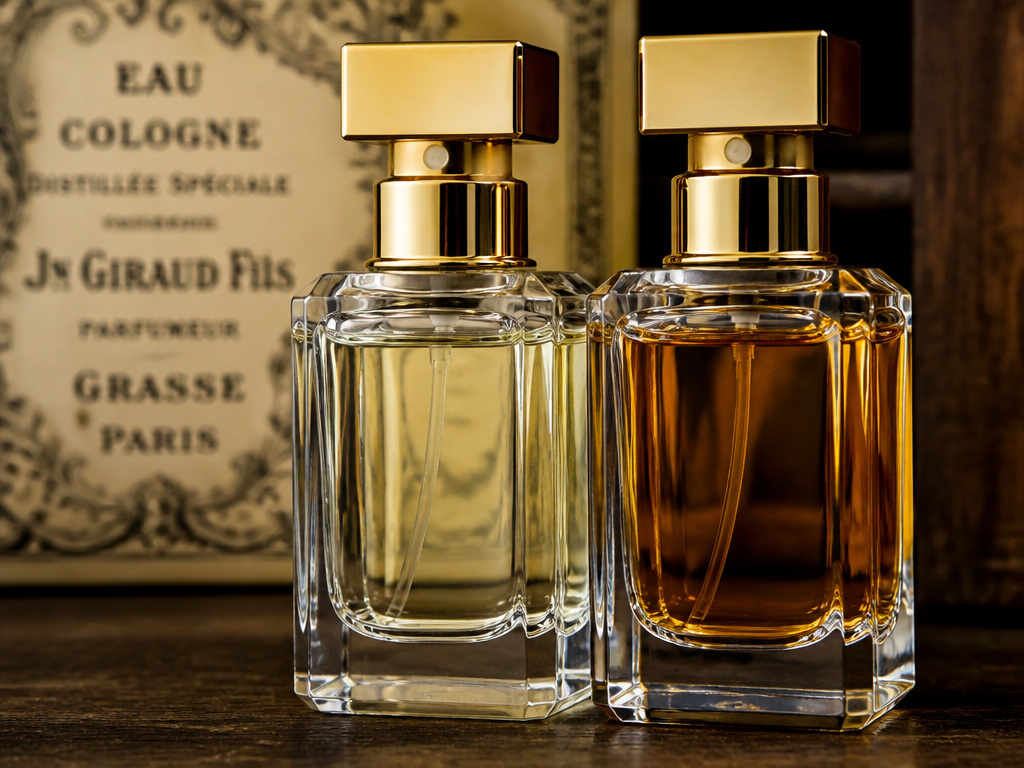
A darker juice is not proof of anything. Some formulas simply tint over time, and I’ve had bottles go amber in the glass while smelling exactly as they did on day one.
Orchadia calls colour problems the most common failure mode once a fragrance goes into a cosmetic base, which is a real finding and also the reason colour gets over-read. A colour shift tells you something changed. It doesn’t tell you the scent is gone.
What actually goes first is the top. Pia Pallez at Bvlgari told Byrdie that oxidation hits the citrus and aromatic top notes first, and that woodsy notes, amber and leather stay quite stable even after three years. Creed says the same thing from the other side: heavier base notes like oud or musk are less sensitive to oxidation, so leather and amber profiles typically last longer.
Here’s where the sources genuinely split. Pallez also says chypre fragrances with a high concentration of patchouli tend to risk a scent’s longevity, while Creed’s position is that heavy base notes resist oxidation better. Those point in opposite directions for the same family of scent. I don’t have the data to settle it, and I’d be suspicious of anyone who claims to.
Rule of thumb: Judge an old bottle by the top notes, not the colour. If the opening still lifts, the base is almost certainly fine. If the opening smells flat and slightly waxy, the top has gone and the rest is on borrowed time.
This is why composition matters more than price when you’re thinking about shelf life. A resinous oriental has a lot of base to lose and holds its shape for years. A bright citrus cologne built on lemon and orange oil has almost nothing underneath, and Orchadia notes those citrus oils oxidise into something flatter and less sparkly.
Buying vintage perfume online is its own gamble, and the experts don’t agree on it either. Lom Glassworks says a 20-year-old factory-sealed bottle can be perfectly preserved and genuinely valuable. Pia Long’s warning to Byrdie runs the other way: beware the vintage find, because the top notes are usually off by the time you get it. Both can be true. The seal protects the base. Nothing protects a citrus opening for twenty years.
Where to Store an Unopened Bottle (and the Two Places That Ruin It)
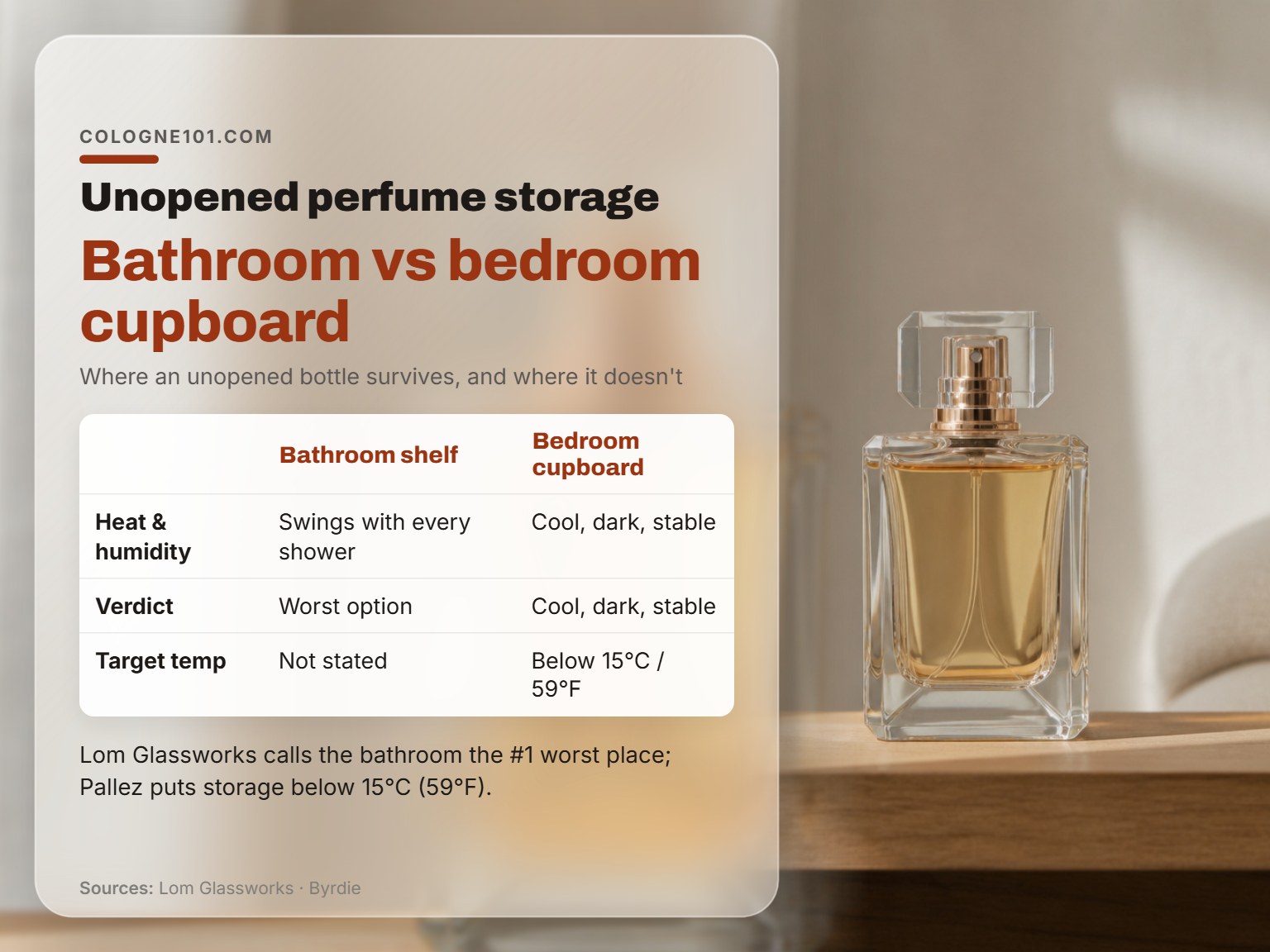
The bathroom is the worst room in the house for a bottle, and it’s where most people keep one.
| Location | What it does to the juice | Verdict |
|---|---|---|
| Bathroom shelf | Heat and humidity swing with every shower | Worst option |
| Car glovebox | Freezing to baking, repeatedly | Ruins it fast |
| Bedroom cupboard | Cool, dark, stable temperature | Best default |
| Fridge | Slows oxidation; moisture and door-light caveats | Citrus only, wrapped |
| Original box in a drawer | Blocks light, keeps the date | Very good |
Lom Glassworks calls the bathroom the number one worst place and describes the glovebox as a bottle cooker, which matches the physics. Heat speeds up every reaction that ages perfume, and a shower creates a temperature and humidity cycle several times a day.
The short version of where to store perfume is cool, dark and stable. Pallez’s number for this is below 15°C, or 59°F, though Michel Germain notes a consistently cool drawer or closet works just as well. That’s cooler than most people keep a bedroom, which is why the fridge conversation keeps coming up.
Worth knowing before you start: A warm cupboard is running its own accelerated test. The reference ageing condition in the literature is 37°C for three months, and at that condition up to 40 percent of certain aldehydes had already converted to acetals. Your shelf probably isn’t that warm, but the direction of travel is the same.
The fridge question splits the sources cleanly. Byrdie’s Pia Long says citrus-based scents can go in the fridge to slow oxidation, with a caveat from Pallez that a fridge door opening constantly lights up the interior, so wrapping the bottle in foil or using the freezer are alternatives. Michel Germain counters that a consistently cool drawer or closet works just as well without the moisture and food-odor risks. Bon Parfumeur treats the fridge as a misconception worth checking.
I’ve landed on the drawer. The basics of perfume storage tips are boring and they work: steady temperature, no light, no humidity. A fridge adds a moisture variable and a light variable to solve a temperature problem you probably didn’t have.
Box, Atomizer, or Decant: What Actually Protects the Juice
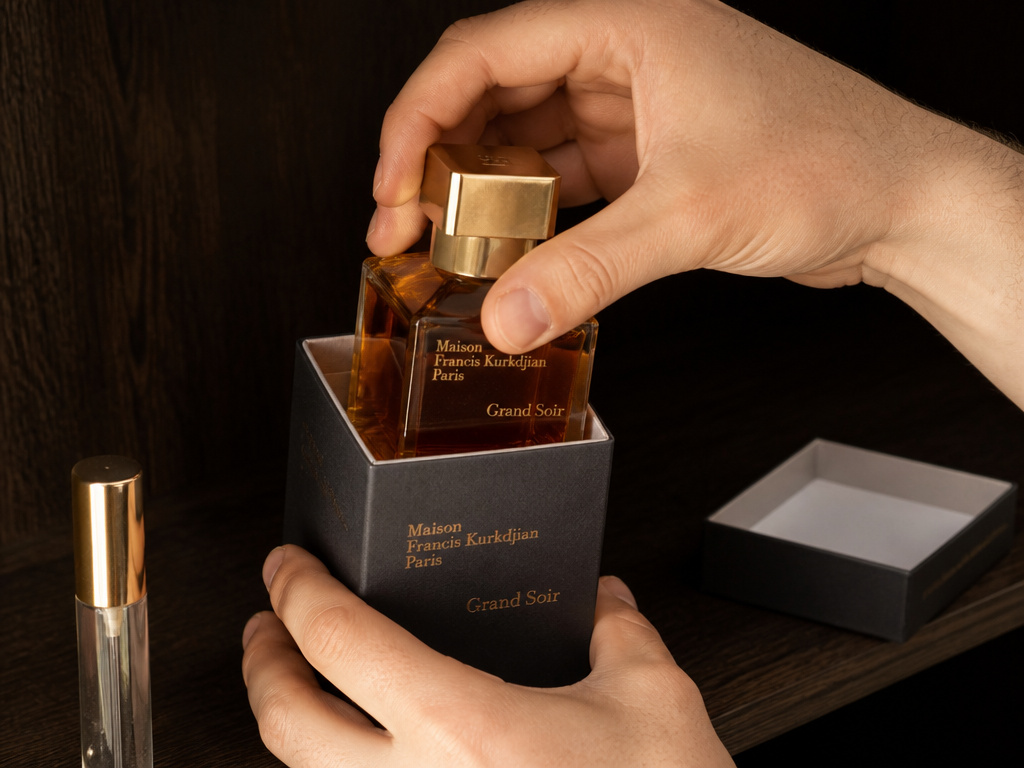
Does the box actually do anything? Yes, and it’s the cheapest upgrade you can make.
Buchart Colbert’s guidance is that retaining the original box shields the bottle from light and slows oxidation, and that storing the bottle in its box when not in use is a simple step that helps. Given the daylight-versus-dark numbers from the 1987 study, that’s not a small effect.
Creed adds two more: keep the perfume in its original bottle and replace the cap after use, because re-housing exposes it to air and speeds both oxidation and alcohol evaporation. Their position is that bottles with atomiser sprays limit oxygen exposure and prolong lifespan.
Then Byrdie complicates it. Long’s advice is to decant into a travel spray once the bottle is mostly air, because more oxygen above the juice means faster oxidation and saving the last drops is a bad idea. But Byrdie also notes that frequently decanting into atomisers exposes the fragrance to oxygen and won’t help longevity.
Both are right, and the resolution is about frequency:
- Decant once, late. Move the last of a bottle into a small travel spray when it’s mostly air, and do it one time.
- Don’t decant for convenience. Topping up a Travalo every week is a weekly oxygen hit.
- Keep the original bottle and cap it. The bottle was designed for the juice.
- Keep the box if you have the shelf space for it.
The original box is doing the same job as a dark cupboard, just at a smaller scale.
Where this goes sideways: Decanting a nearly full bottle into a travel atomiser “to protect it.” You’ve just added a second container with its own headspace and a fresh dose of oxygen, and the juice now has two places to degrade instead of one.
How to Tell If an Unopened Bottle Has Gone Bad
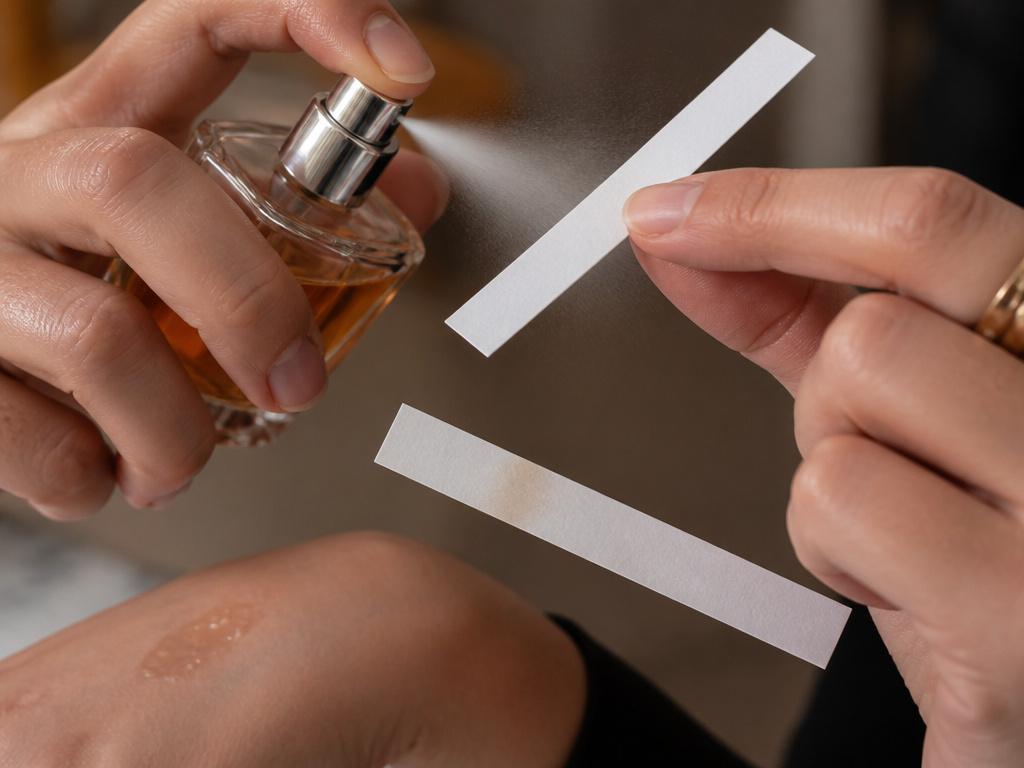
Three checks, in this order: look at it, smell it on paper, then patch test it.
- Look at the juice. Fog, sediment floating in the liquid, or a ring of residue at the shoulder are all documented warning signs. Buchart Colbert lists both fog and sediment as reasons to stop.
- Smell it on a blotter, not your wrist. Lom Glassworks recommends spraying onto paper or a blotter first and letting it dry before deciding. Paper gives you the scent without skin chemistry in the way.
- Wait for the drydown before you judge. The top notes are the part most likely to have gone flat, and they burn off in minutes. What’s left after the top notes burn off is the real answer.
- Patch test before you commit. Long’s advice to Byrdie is to test inside the wrist and check after 24 hours before applying more widely.
The Blotter Test
Paper strips are cheap and they remove one variable. Skin chemistry, temperature and moisture all change how a fragrance reads, and when you’re trying to work out whether the juice has turned, you want fewer moving parts, not more.
The 24-Hour Patch Test
This one matters more than people think. Long notes that oxidised products can become skin irritants and may stain clothes where they didn’t before. A 24-hour check on the inside of the wrist costs you nothing.
The signs of expired perfume show up in the top notes first, then in performance. If a fragrance that used to last all day now fades quickly, that’s data.
Easy to miss: A bottle can smell fine on paper and still irritate skin. The blotter test tells you about the scent. The patch test tells you about you.
Frequently Asked Questions
Can unopened perfume go bad?
Yes, but slowly. An unopened bottle has no oxygen exposure, so the main degradation pathway is largely closed off. What’s left is heat, light and time. Michel Germain notes that some unopened fragrances stay in excellent condition after a decade or more if stored cool and dark, while Buchart Colbert puts the working range at three to five years or more, and up to ten in the original package.
Does perfume have an expiration date by law?
No. The FDA states plainly that no U.S. Laws or regulations require cosmetics to have specific shelf lives or expiration dates on their labels. Shelf-life determination is the manufacturer’s responsibility, and the agency doesn’t receive stability-testing data. Drugs, including SPF products, are a separate category and must carry expiry dates under 21 CFR 211.
Is it safe to use a 10-year-old unopened bottle?
Often yes, with a test first. Storage decides this more than age does. Smell it on a blotter, then patch test on the inside of your wrist and check after 24 hours. Oxidised products can become skin irritants and may stain fabric, so a reactive result is your signal to stop.
Should I keep unopened perfume in the fridge?
Only if you want to, and mostly for citrus. Byrdie’s experts suggest the fridge for citrus-forward scents, but note that a frequently opened door lets light in. Michel Germain’s position is that a consistently cool drawer or closet works just as well without the moisture and food-odor risks. A cupboard at room temperature is the safer default.
Does eau de parfum last longer than eau de toilette?
The sources disagree, so treat blanket claims with care. Buchart Colbert says high essential-oil concentrations like eau de parfum and parfum outlast high-alcohol eau de toilette. Pallez told Byrdie the opposite, that colognes and eau de toilettes at 90 percent alcohol tend to last longest, and that a fragrance is usually 70 to 90 percent alcohol providing preservative support. Michel Germain’s take is that ingredients and storage matter more than the EDP-versus-EDT label.
The Bottom Line
Write the purchase date on the box the day the bottle arrives. That single habit does more for your collection than any storage gadget, because it turns a guess into a record. It’s the most underrated thing you can do, and it costs nothing.
One threshold worth keeping: if an unopened bottle has sat in a bathroom or a hot car, stop treating it as unopened. Treat it as an opened bottle and use it up.
And if you’re weighing a bottle that might sit for a while, buy for the base notes. A resinous oriental holds its shape for years. A bright citrus cologne is the one to drink young, so to speak, because the part you’re paying for is the part that leaves first.
Give it time on skin, but give an old bottle a blotter first.
